
Industrial Blasting Materials: Advanced Technical Guide – Principles, Processes, and Engineering Applications
 2026-09-14
I. Detonation Reaction Kinetics and Oxygen Balance Theory
Explosive detonation is essentially a rapid chemical reaction, distinct from conventional combustion in three major aspects:
• Strong exothermic reaction (source of energy)
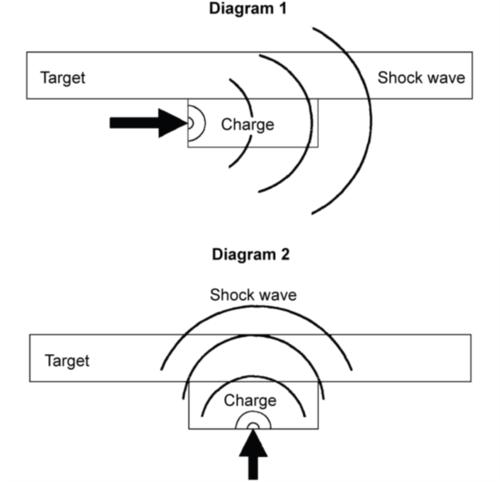
• Extremely high reaction rate (formation of shock waves)
• Generation of large volumes of gas (working medium for energy transfer)
1. The Key to Energy Release: Oxygen Balance
Oxygen balance is a critical chemical indicator that determines explosive performance and the generation of harmful gases. It refers to the difference between the oxygen content within the explosive and the oxygen required to completely oxidize combustible elements (C, H).
• Zero Oxygen Balance:
The ideal formulation state, where the chemical reaction releases maximum heat, provides the strongest working capacity, and produces minimal toxic gases.
• Negative Oxygen Balance:
When oxygen is insufficient (e.g., TNT), incomplete reactions occur, generating toxic and combustible gases such as CO and reducing heat release.
• Positive Oxygen Balance:
When oxygen is excessive, surplus oxygen may react with nitrogen to form highly toxic nitrogen oxides (NO).
• Engineering Application:
In underground mines and tunnels with poor ventilation, explosives close to zero oxygen balance (e.g., water-gel explosives) must be used. Explosives with positive oxygen balance or negative oxygen balance marked with a red line are strictly prohibited to prevent fume poisoning.
2. Key Detonation Parameters
The speed of propagation of the detonation wave within the explosive (3,000–9,000 m/s). High-velocity explosives (e.g., emulsion explosives) produce high brisance and are suitable for hard rock, while low-velocity explosives (e.g., low-density ANFO) are better for loosening fragmentation.
• Heat of Explosion and Detonation Temperature:
The heat of explosion of common industrial explosives ranges from 1,675 to 6,280 kJ per kg, and instantaneous detonation temperatures reach 1,500–4,500°C, which provides the fundamental energy for rock fragmentation.
II. Microstructural Modification and Manufacturing Processes of Modern Industrial Explosives
With technological advancement, industrial explosives have evolved from physical mixtures to micro-structurally engineered systems.
1. Emulsion Explosives: Water-in-Oil (W/O)
Emulsion explosives disperse oxidizer solution into micron-scale droplets within a continuous fuel oil phase, forming a thermodynamically unstable emulsion.
• Manufacturing Process:
Modern production adopts continuous processing. The water and oil phases are sheared at high speed in static mixers or colloid mills, and sensitized either physically (glass microspheres) or chemically (foaming agents generating microbubbles) to form hot spots.
• Stability Control:
To prevent phase separation or crystallization during storage, polymeric emulsifiers are added to strengthen the oil film integrity.
2. Expanded Ammonium Nitrate Explosives: Crystalline Physical Modification
To address the traditionally low sensitivity of AN-based explosives, puffing technology employs surfactants under vacuum conditions to induce structural distortion in ammonium nitrate crystals.
• Mechanism:
Micro-pores are formed throughout the surface and interior of AN granules, dramatically increasing specific surface area and oil absorption. This structural modification significantly improves detonation sensitivity, enabling reliable propagation even without TNT sensitization.
3. Water-Gel Explosives: Chemical Gel Systems
Using sensitizers such as potassium ammonium nitrate and adding gelling and cross-linking agents, the explosive forms an elastic gel with robust water resistance. Density can be adjusted between 1.05–1.30 g/cm³, making it ideal for high-energy deep-hole blasting.
III. Precision Initiation Systems
Detonation systems have progressed from chemical delay to electronic chip–controlled initiation.
1. Electronic Detonators: Dual-Capacitor Intelligent Control
Electronic detonators integrate a microelectronic control module, eliminating the low timing accuracy of traditional chemical delay detonators.
• Circuit Logic:
Two capacitors are integrated in electronic detonators: C1 (communication/storage) powering the control chip and C2 storing firing energy. With electronic switches (K1, K2, K3), C2 discharges only after ID verification, charging completion, and countdown expiration.
• Safety Features:
It has the ability to resist to 220V AC, 25kV electrostatic discharge and stray current. In emergencies, the control module can command K2 to close and safely discharge C2, rendering the detonator inactive.
• Application Advantage:
Delay accuracy within ±1.5 ms enables precise hole-by-hole micro-delay blasting, significantly reducing vibration effects.
2. Nonel Detonators: Shock Wave Transmission in Tubing
A thin layer of explosive (13–18 mg/m) coated on the inner wall of a plastic tube produces a shock wave that propagates at 1,600–2,000 m/s through the tube (the “pipe effect”).
3. Magneto-electric Detonators
Using transformer coupling principles, they are triggered by specific AC signals and are inherently shielded against stray DC currents.
IV. Expert Technical Q&A
Q1: Why can electronic detonators reduce blasting vibration?
A: Blasting vibrations are cumulative. With timing accuracy better than 1.5 ms, electronic detonators precisely control the blasting time of each borehole. By exploiting wave interference, seismic waves from different holes become phase-shifted and partially cancel each other, significantly reducing overall vibration intensity.
Q2: What is the “critical diameter” of industrial explosives?
A: Critical diameter is the minimum cartridge diameter that allows stable detonation propagation. If the charge diameter is below this limit, excessive lateral energy loss causes detonation failure. In applications such as deep-hole blasting or slender cartridges, charge diameter must exceed the explosive’s critical diameter.
Q3: How do permissible (flameproof) explosives ensure safety in coal mines?
A: Permissible explosives limit flame temperature and duration to prevent ignition of mine gases. This is typically achieved by adding “flame suppressants” (e.g., K₂SO₄, KNO₂), which absorb heat and inhibit chain reactions during detonation.